Residential
Exterior House Painting in South Florida
An exterior repaint here is a waterproofing job with color on top. We wash, repair the cracks, seal the openings and then apply a coating system chosen for how much sun, rain and salt that particular wall actually takes.
Who this is for
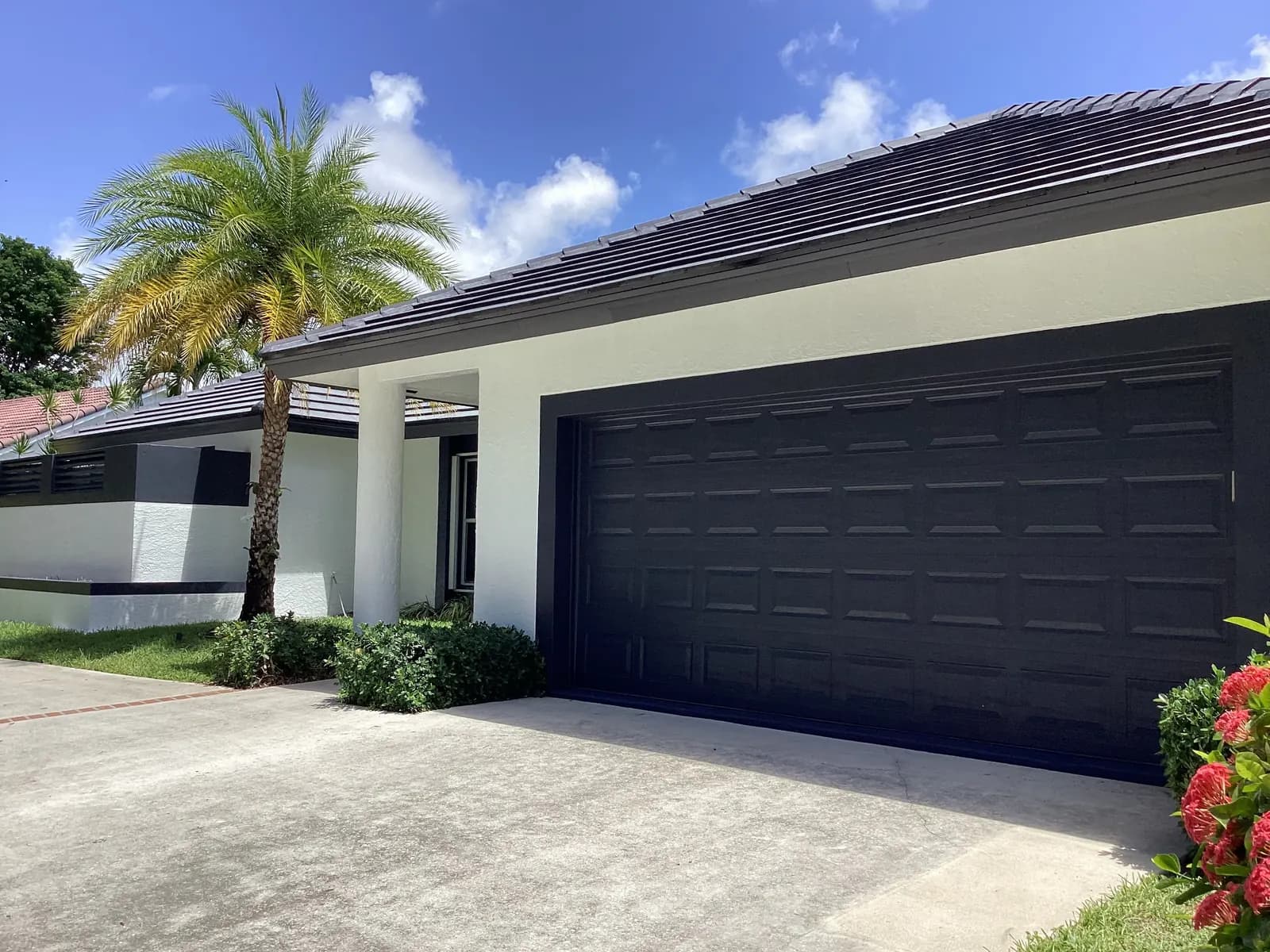
Owners of stucco and concrete-block homes anywhere between Miami and West Palm Beach, and especially anyone within a few miles of the ocean or the Intracoastal. Three things drive exterior failure in South Florida: ultraviolet light, which breaks down the binder and leaves the chalky residue you can wipe off with a hand; wind-driven rain, which finds hairline cracks in stucco and pushes water into the wall; and airborne salt, which sits on the surface and attacks coatings and metal. Preparation is what separates a repaint that lasts from one that fails on the south and west elevations first.
What's included
- Pressure or soft washing of every surface to remove chalk, mildew, dirt and salt
- Hairline and larger stucco cracks routed, patched and textured to match
- Wood rot in fascia, soffits and trim cut out and replaced
- Windows, doors, control joints and penetrations re-caulked with an elastomeric sealant
- Bare and repaired areas primed with a masonry-appropriate primer
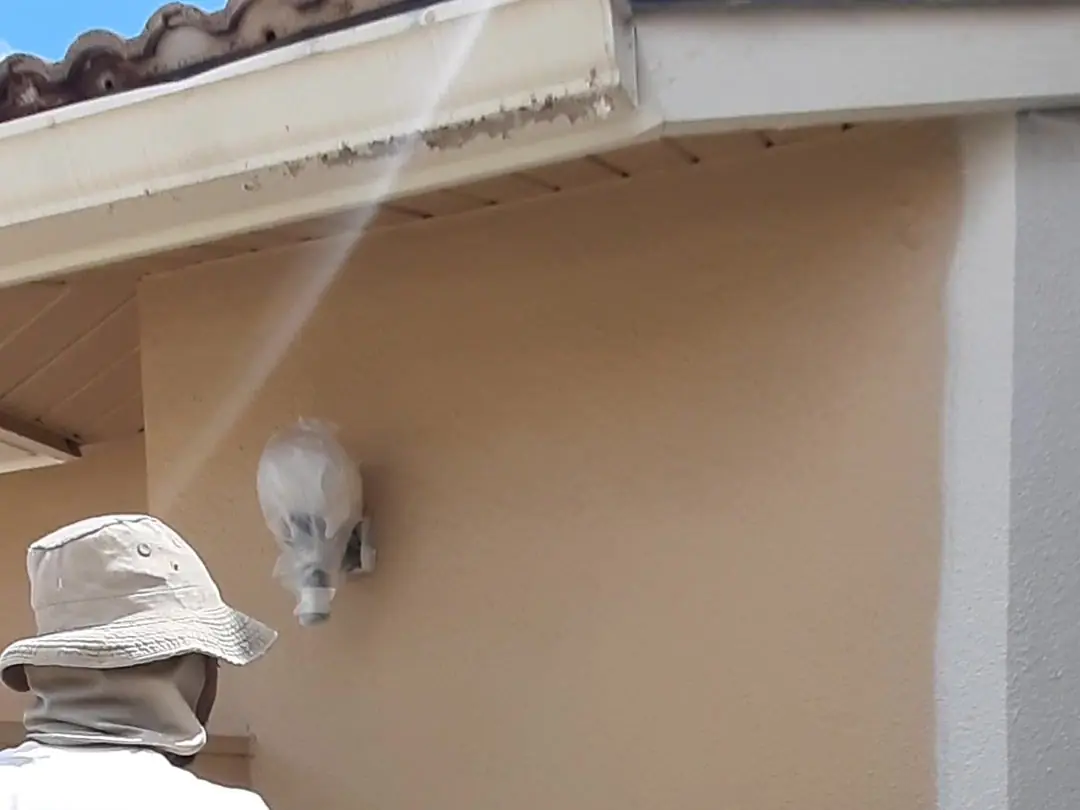
- Landscaping, pool decks, driveways, windows and light fixtures masked and protected
- Two finish coats on body walls; trim, doors, garage doors and shutters quoted separately
- Site cleaned daily and a final walkthrough from ground level and from the street
Our process for exterior painting
Inspection and moisture check
We walk the elevations, note cracking, chalking, past repairs and anywhere water is getting in, and check that the substrate is dry enough to coat. That inspection becomes the scope you sign.
Wash and let dry
The house is washed to remove chalk, mildew, dirt and salt, then given time to dry. Coating over a damp or chalky wall is the single most common cause of early peeling here.
Repair and seal
Stucco cracks are opened, filled and textured to match; rotten wood is replaced; windows, doors and control joints are re-caulked. This is the part of the job that actually keeps water out.
Prime
Repairs, bare masonry and chalky areas get a masonry or bonding primer, so the finish coat has something sound to hold on to.
Apply the finish system
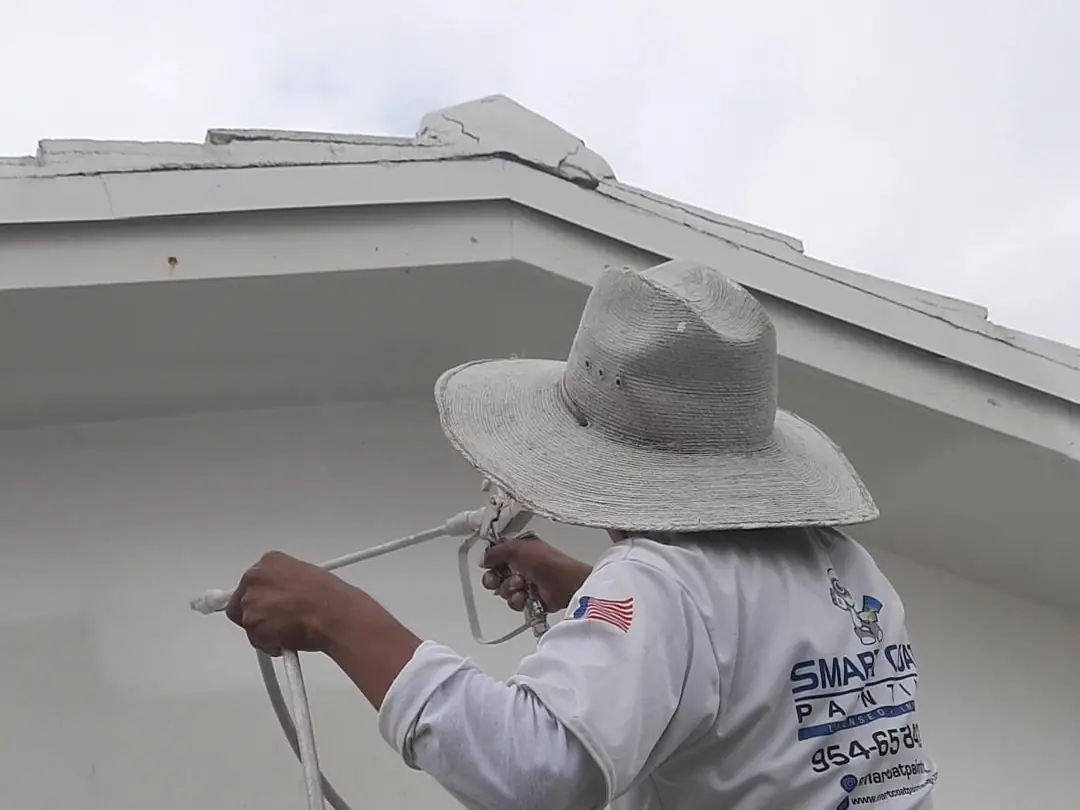
Body walls are sprayed and back-rolled so the coating is worked into the texture rather than sitting on top of it, then trim, doors and details are cut in by hand.
Walkthrough
We walk the whole exterior with you, from the street and up close, and correct anything on your list before the final invoice.
Materials and systems
- 100% acrylic exterior finishes with UV-stable pigments
- Elastomeric coatings where hairline stucco cracking needs to be bridged
- Masonry and bonding primers for bare, patched or chalky substrates
- Polyurethane and hybrid sealants at windows, doors and control joints
- Stucco patching compounds matched to the existing texture
- Direct-to-metal coatings for railings, gates, shutters and garage doors
On the job
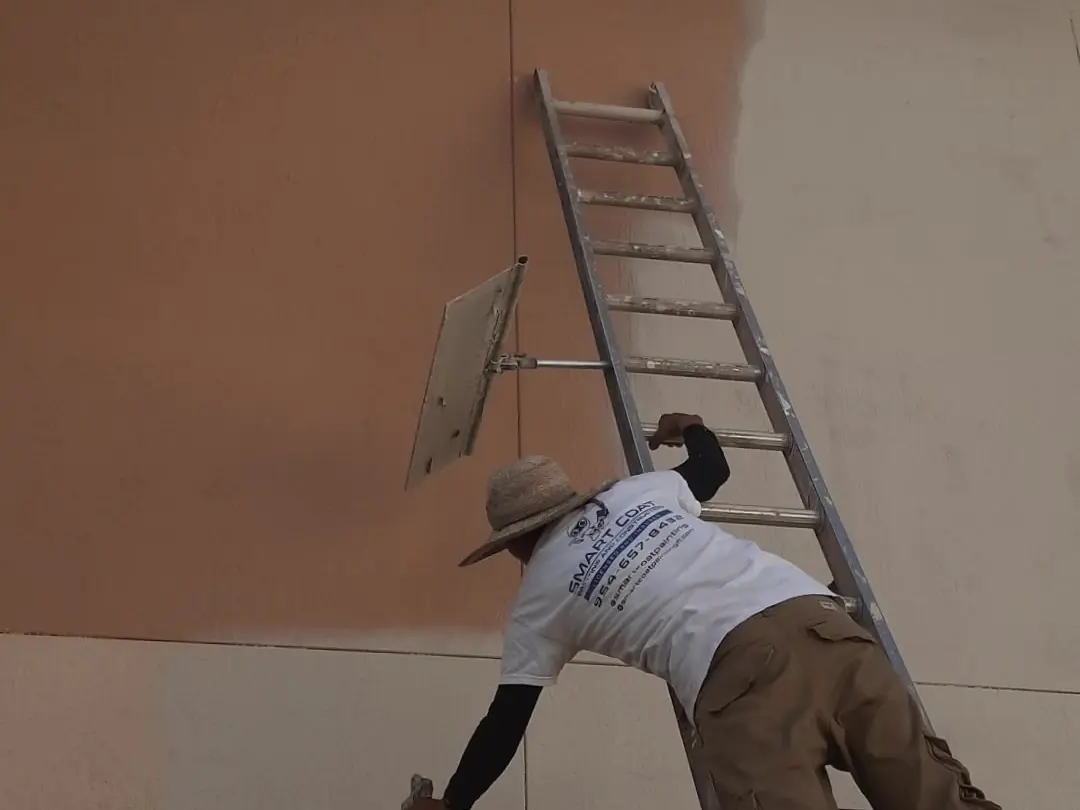
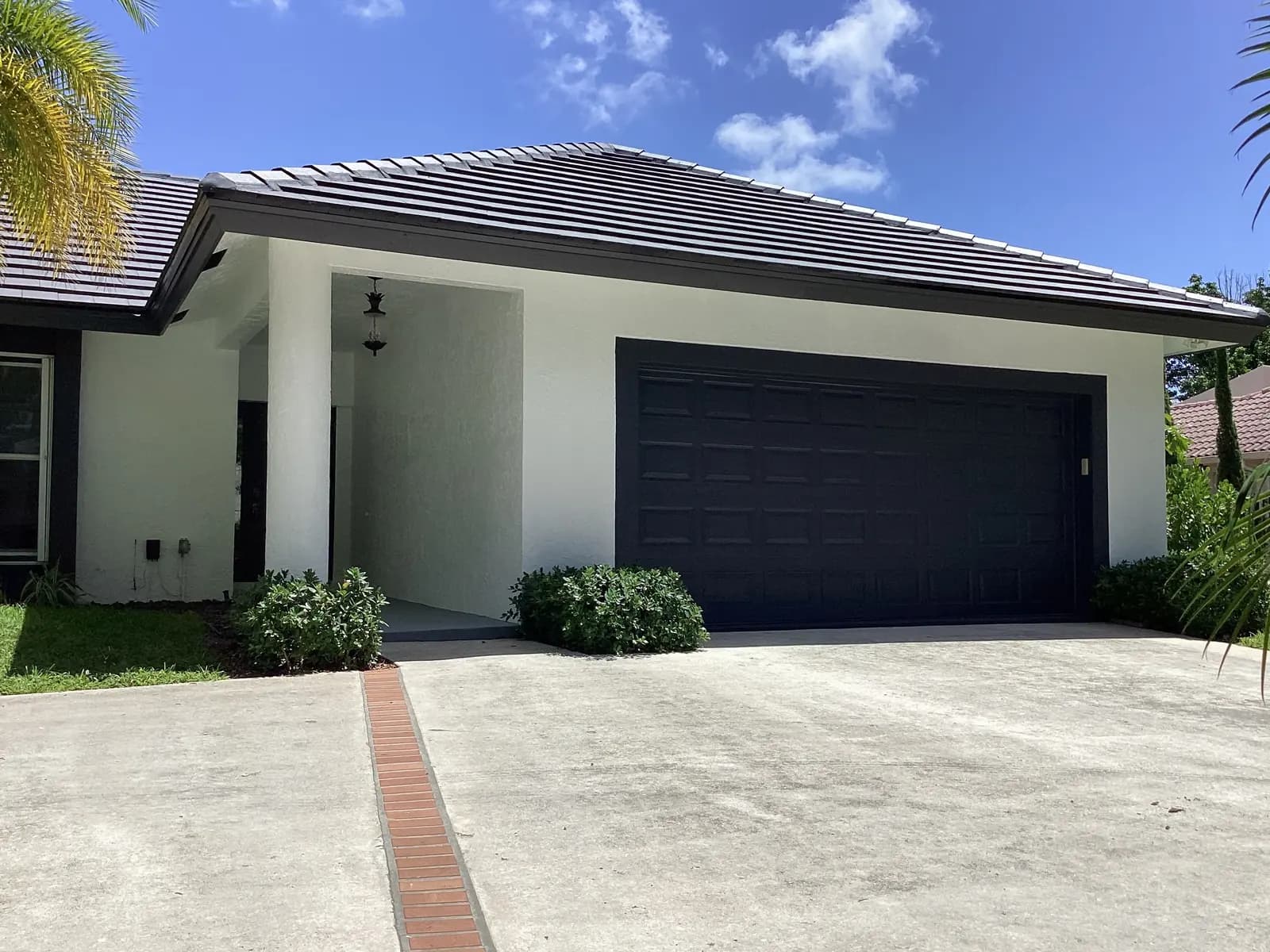
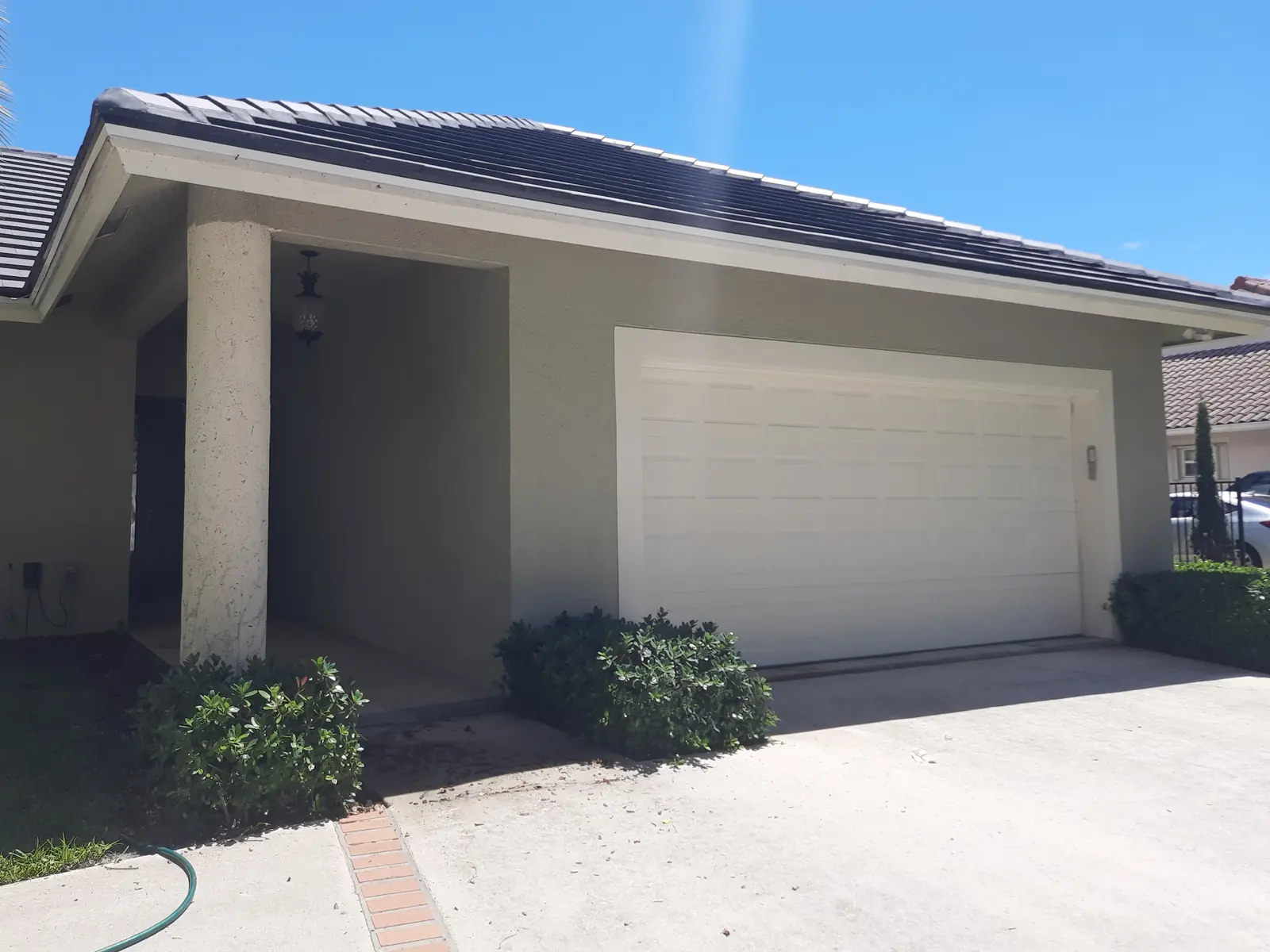
Before and after
What affects the price
- Square footage, number of stories, and how much of the house needs staging or lifts
- Condition of the stucco — hairline cracking versus areas needing patching or re-texturing
- Amount of wood rot and trim replacement found during the wash
- Whether an elastomeric system is needed or a standard acrylic will do
- Number of colors, and whether shutters, doors, railings and driveways are included
Questions about this service
How often does a South Florida house need repainting outside?
Typically every five to ten years, and at the shorter end of that if you are near the ocean or the house takes full afternoon sun. Chalk that comes off on your hand, hairline cracks that have opened up and color that has faded unevenly between elevations are the signs to act on.
What is the best time of year to paint an exterior in Florida?
The dry season, roughly November through April, is the easiest window: less afternoon rain and lower humidity, so coatings cure properly. Summer work is entirely normal here too — it just has to be scheduled around the afternoon storm pattern, with earlier starts and a close eye on the forecast.
Do you pressure wash before painting?
Always. Washing removes the chalk, mildew, dirt and salt that stop paint bonding, and it is included in every exterior scope rather than sold as an add-on. The house then needs time to dry before any coating goes on.
Should I use elastomeric paint on my stucco?
Only if the wall actually needs it. Elastomeric coatings are thick and flexible, so they bridge hairline cracking well, but they also hold moisture in a wall that is already wet and they cost more. We recommend them where cracking is the problem and a high-build acrylic where it is not.
Do you repair stucco cracks and wood rot as part of the job?
Yes. Crack repair, patching, texture matching and replacement of rotten fascia, soffit and trim are quoted as line items in the estimate, so you can see exactly what the repair portion costs.
How does salt air affect exterior paint?
Salt settles on the surface, holds moisture against the coating and accelerates corrosion of any exposed metal — nail heads, railings, light fixtures and window frames. Coastal homes need a thorough wash before painting and benefit from direct-to-metal coatings on the metalwork.
Will you paint my roof tiles?
Roof coating is a separate service from house painting, and for algae and mold staining a preventive treatment is usually the better answer than paint. See Roof-A-Cide for tile and shingle roofs, or roof restoration for flat and low-slope commercial roofs.
Keep looking
Related services
- Pressure CleaningDriveways, walkways, pool decks, roofs and building exteriors washed at the right pressure.Explore
- Stucco RepairCracked, flaking and delaminated stucco cut out, rebuilt and textured to match.Explore
- Roof-A-CidePreventive roof treatment that stops algae and lichen from coming back — no pressure washing.Explore
Where we do exterior painting
Guides
Guides on exterior painting
Sourced answers to the questions this work raises most often. Every figure carries a citation.
All guides6-minute read
How long does exterior painting take in South Florida?What decides the calendar on an exterior repaint here: crew size, the coating's recoat window, stucco cure times, rain and dew — with the figures.6-minute read
How much does exterior house painting cost in South Florida? (2026)National and Florida-specific 2026 cost data for an exterior repaint, what stucco changes, and the five things that move a quote up or down.6-minute read
The best time of year to paint in South Florida (with the weather data)November to April is the dry season, and the rainfall normals show why. What temperature, humidity and dew point rule out here — and what they do not.6-minute read
Why exterior paint peels, blisters and chalks in Florida — and how to fix it properlyBlistering, peeling, chalking, efflorescence and surfactant leaching — each with the manufacturer's stated cause and repair, plus the cure and pH limits.
No obligation
Get a price for your exterior painting job
Send the details and we will walk the property, write a scope you can read, and price it line by line.