Commercial & HOA
Concrete Restoration and Spalling Repair
Spalling concrete is a corrosion problem, not a cosmetic one. Chipping and flaking almost always mean the reinforcing steel inside has rusted and expanded — so the repair has to reach the steel, treat it and rebuild the concrete around it.
Who this is for
Condo associations, HOAs and commercial owners with flaking balcony edges, rust staining, cracked slabs, parking structures showing wear, or repairs identified in an inspection report. Coastal South Florida is close to a worst case for reinforced concrete: chloride from salt air penetrates the concrete cover, reaches the reinforcing steel and starts corrosion, and rusting steel expands enough to break the concrete off from the inside. Patching the surface without treating the steel leaves the corrosion running and the same edge fails again within a few years. Repairs required by a milestone inspection or a structural engineer's report are within our scope.
What's included
- Survey and sounding to map the full extent of delamination, not just what is visible
- Removal of unsound concrete back to solid material around each repair
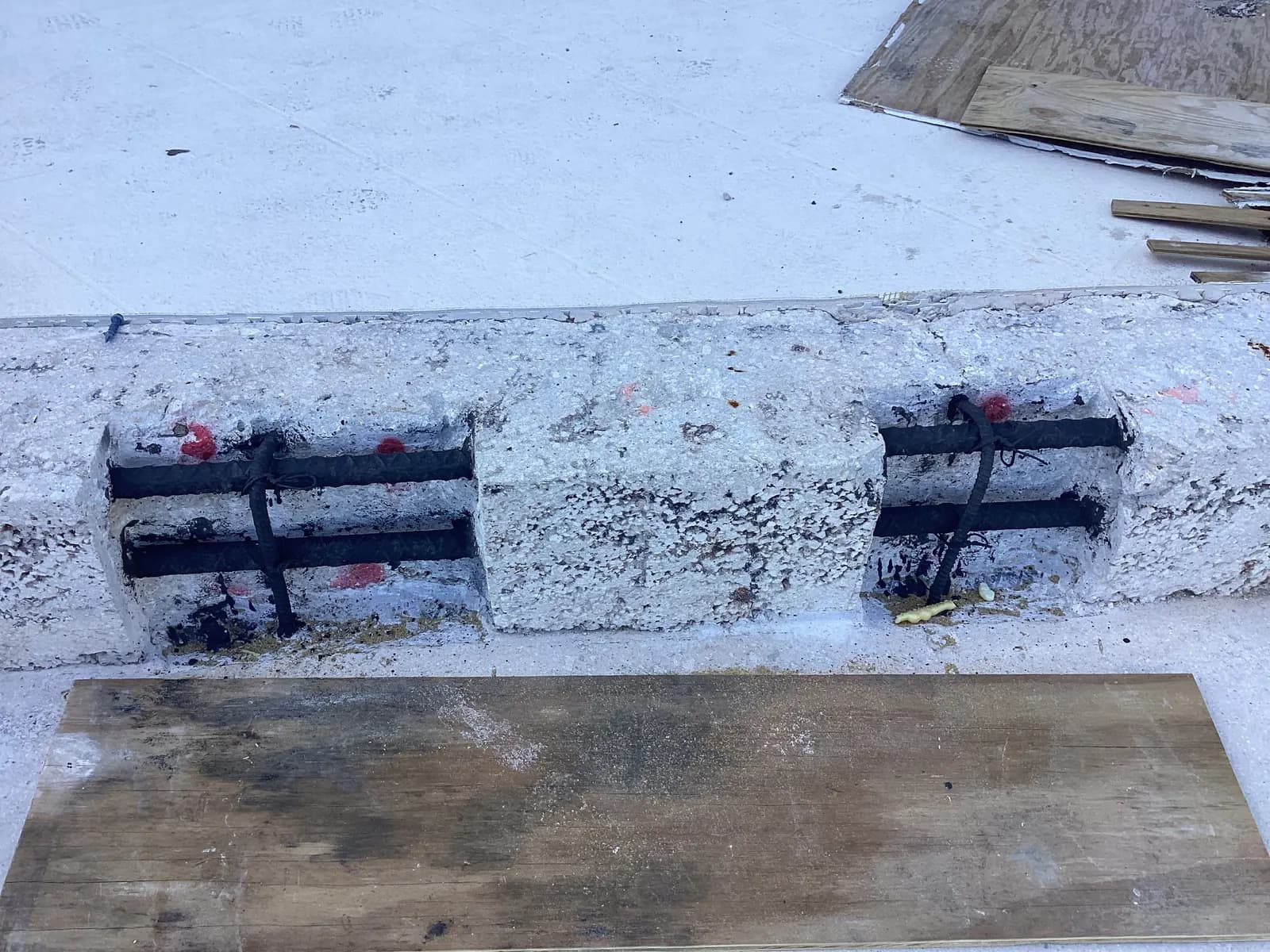
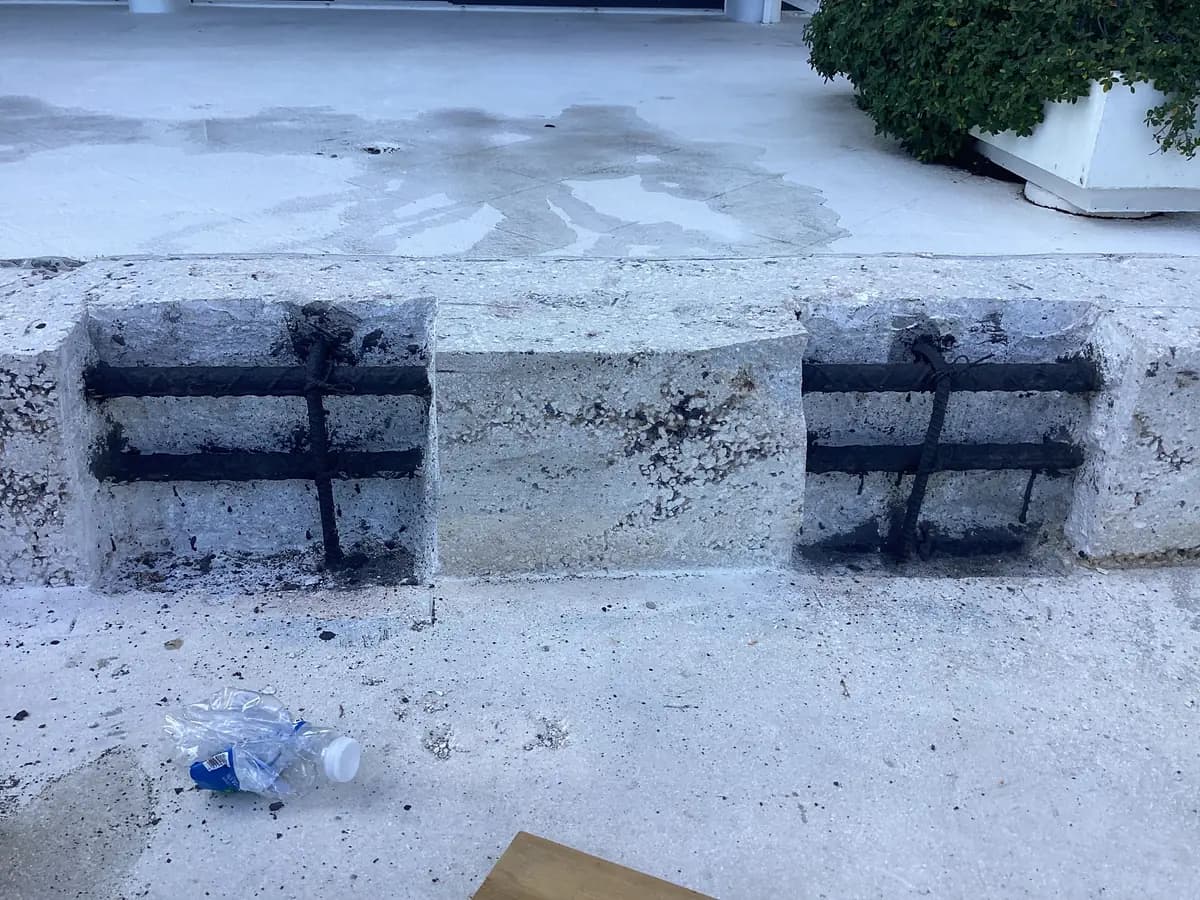
- Reinforcing steel exposed, cleaned of corrosion and treated with a corrosion inhibitor
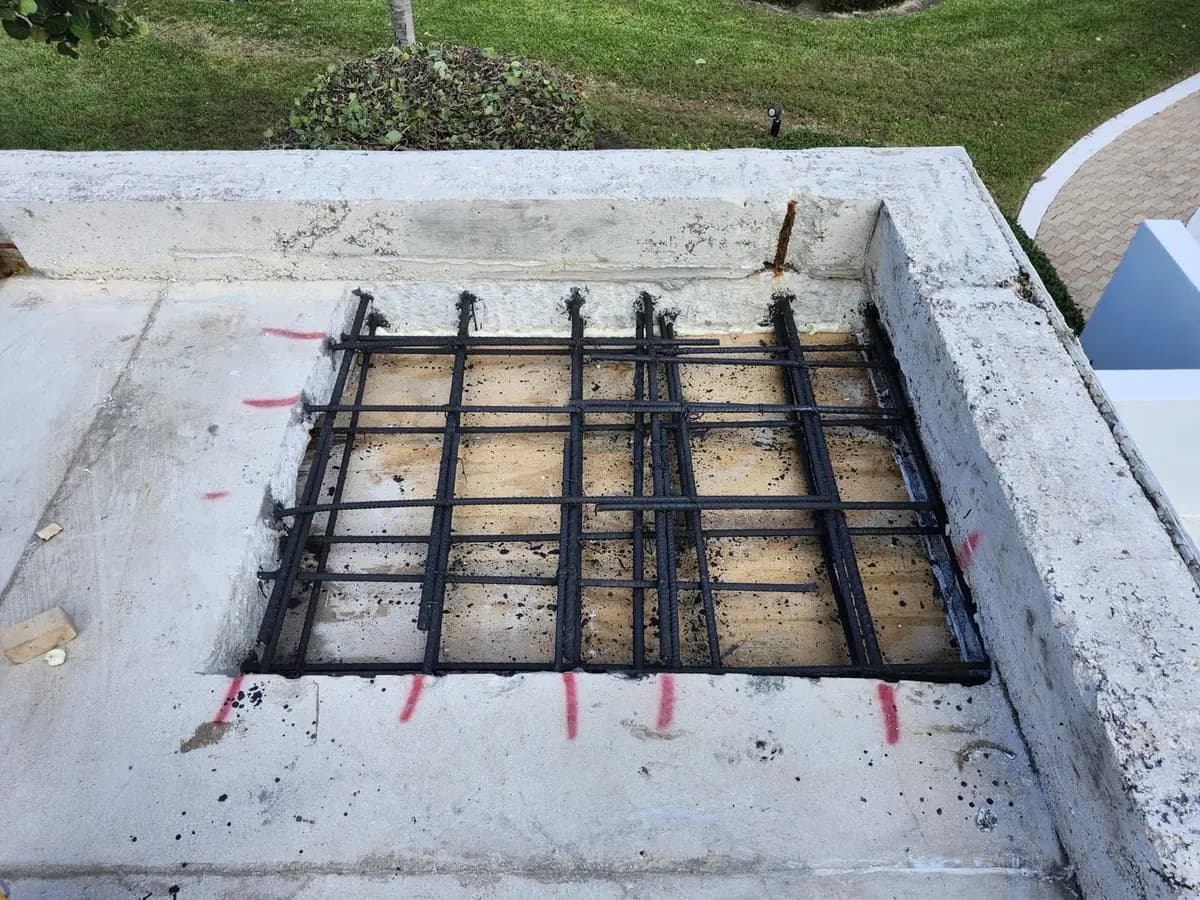
- Additional or replacement reinforcement where section loss requires it
- Repair mortar placed, formed where needed, and finished to match the surrounding profile
- Crack routing, filling and injection where appropriate
- Balcony edges, slab soffits, columns, beams, walkways and parking structures
- Sealing and coating of the repaired area as part of the same contract
Our process for concrete restoration
Survey and sound the concrete
We sound the surfaces to find the delaminated areas, because the damage is almost always larger than the visible spall. That survey sets the true quantity of repair.
Remove unsound concrete
Loose and delaminated concrete is removed back to sound material and behind the reinforcing steel, so the repair mortar can fully encase it.
Treat the reinforcement
Exposed steel is cleaned back to bright metal and treated with a corrosion inhibitor. Where section loss is significant, additional reinforcement is added.
Rebuild
Repair mortar is placed and finished to match the existing profile and texture, whether that is a balcony edge, a slab soffit, a column or a walkway.
Protect the repair
The repaired area is sealed or coated, and where water was the cause we address the source as well — otherwise the same repair will be needed again.
Materials and systems
- Polymer-modified structural repair mortars
- Corrosion-inhibiting primers and coatings for exposed reinforcing steel
- Bonding agents for the interface between old and new concrete
- Epoxy and polyurethane injection materials for cracks
- Penetrating sealers and protective coatings for completed repairs
On the job
What affects the price
- Quantity of repair, usually measured by area once the concrete has been sounded
- Depth of repair and whether reinforcement needs replacing
- Access — balconies, soffits and high elevations need lifts or swing stages
- Whether the work is engineer-specified and requires inspection sign-off
- Sealing, coating and restoration of the finish afterwards
Questions about this service
What is concrete spalling?
Spalling is concrete flaking, chipping or breaking away from a surface, and it is usually caused by the reinforcing steel inside corroding and expanding. It is a structural problem in the making rather than a cosmetic one, which is why the repair has to reach and treat the steel.
Why is spalling so common in South Florida?
Salt air is the main reason. Chloride penetrates concrete cover, reaches the reinforcing steel and starts corrosion, and constant humidity keeps the process running. Buildings near the ocean and the Intracoastal show it earliest, typically on balcony edges and slab soffits.
Can you just patch the surface?
No — a surface patch over corroding steel fails, usually within a few years, because the corrosion is still running underneath. Sound repair means removing concrete back behind the steel, cleaning and treating it, then rebuilding.
How do you know how much repair is needed?
We sound the concrete, which reveals delaminated areas that have not yet broken away. The mapped quantity is almost always larger than the visible damage, and it is the honest basis for a quantity-based price rather than a guess.
Do you handle repairs identified in a milestone inspection?
Yes — repairs called out in a structural inspection or engineer's report are work we bid to, line by line against the report. We perform the repairs; the inspection itself is done by a licensed engineer or architect.
How long does concrete restoration take?
It depends almost entirely on the quantity of repair, and repair mortars need cure time before coatings go on. Because the true quantity is only known after sounding, we build the schedule around the surveyed quantities rather than a guess made from the ground.
Do you paint the building afterwards?
Yes. Concrete repair, waterproofing and the finish coating are usually one contract, which avoids the common problem of a repair contractor and a painting contractor blaming each other for the finished appearance.
Keep looking
Related services
- WaterproofingWalls, balconies, decks and joints sealed against wind-driven rain and standing water.Explore
- Stucco RepairCracked, flaking and delaminated stucco cut out, rebuilt and textured to match.Explore
- Surface PreparationSandblasting and diamond grinding to get concrete, metal and masonry ready to coat.Explore
Where we do concrete restoration
Guides
Guides on concrete restoration
Sourced answers to the questions this work raises most often. Every figure carries a citation.
All guidesNo obligation
Get a price for your concrete restoration job
Send the details and we will walk the property, write a scope you can read, and price it line by line.