Residential
Interior Painting in South Florida
Repainting the inside of a Florida home is mostly protection, patching and clean lines — the color is the easy part. We prep the surfaces, mask everything that is not being painted, and leave the house livable at the end of each day.
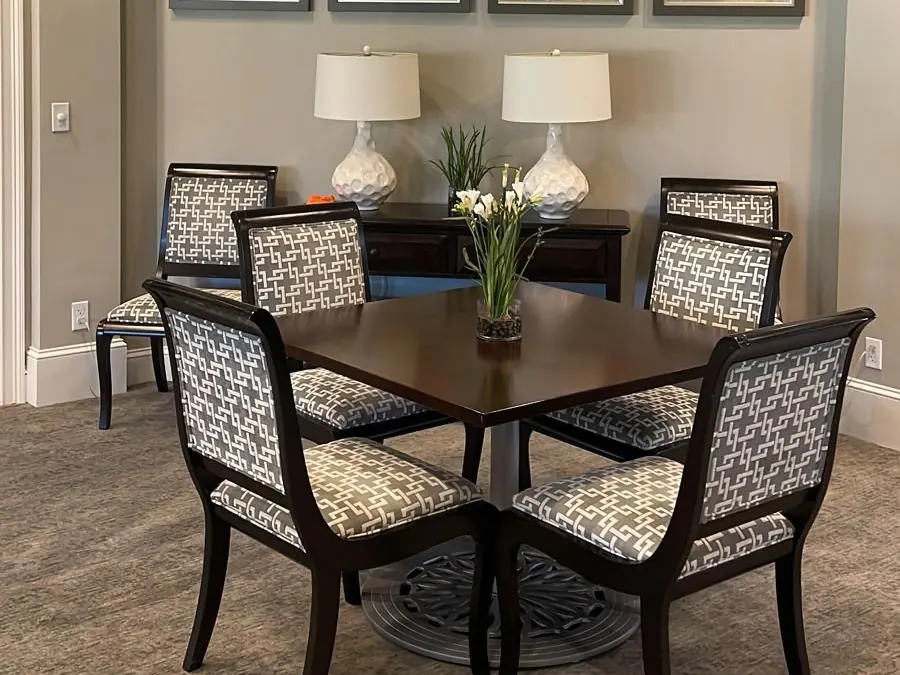
Who this is for
Homeowners refreshing a room, a floor or a whole house; owners preparing a property to sell or rent; and condo owners working around building rules on access, elevators and working hours. Interior work in South Florida also has a moisture problem: air conditioning keeps most of the house workable, but bathrooms, laundry rooms and closets on exterior walls can hold enough moisture to blister a film applied over an unprimed or still-damp patch. We check that repairs are dry before we coat them.
What's included
- Furniture moved to the center of the room and covered; floors papered or dropped
- Fixtures, hardware, switch plates and vents removed and reinstalled
- Nail holes, dents and cracks filled; drywall repairs sanded flush
- Stains, water marks and old repairs spot-primed so they do not ghost through
- Caulking at trim, baseboards and door casings
- Two finish coats on walls unless the estimate says otherwise
- Ceilings, trim, doors, closets and crown molding quoted as separate line items
- Daily clean-up and a walkthrough punch list before the final invoice
Our process for interior painting
Walkthrough and color confirmation
We walk every room with you, agree on the exact scope — which walls, which ceilings, which trim — and confirm colors, sheens and accent walls in writing before we order paint.
Protect and mask
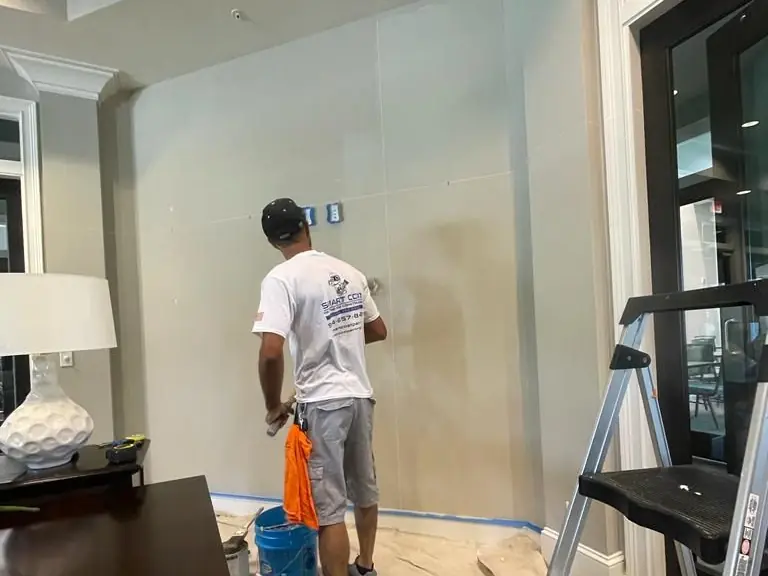
Furniture is moved and covered, floors are protected, and everything not being painted is masked. Hardware and switch plates come off rather than getting cut around.
Repair and prime
Holes, cracks and damaged drywall are repaired and sanded, then spot-primed. Water stains and patched areas get a stain-blocking primer so they do not bleed through the finish.
Cut in and roll
Edges are cut in by hand, then walls are rolled in full coats wet edge to wet edge. Trim and doors are sprayed or brushed depending on the finish you chose.
Clean up and walk the punch list
Hardware goes back on, the site is cleaned, and we walk the job with you under working light. Anything on your list is corrected before we invoice.
Materials and systems
- Low-VOC acrylic latex wall finishes in flat, eggshell and satin
- Scrubbable satin and semi-gloss for kitchens, baths and hallways
- Stain-blocking primers for water marks, smoke and tannin bleed
- Waterborne enamels for trim, doors and millwork
- Mildew-resistant coatings for bathrooms, laundry rooms and enclosed porches
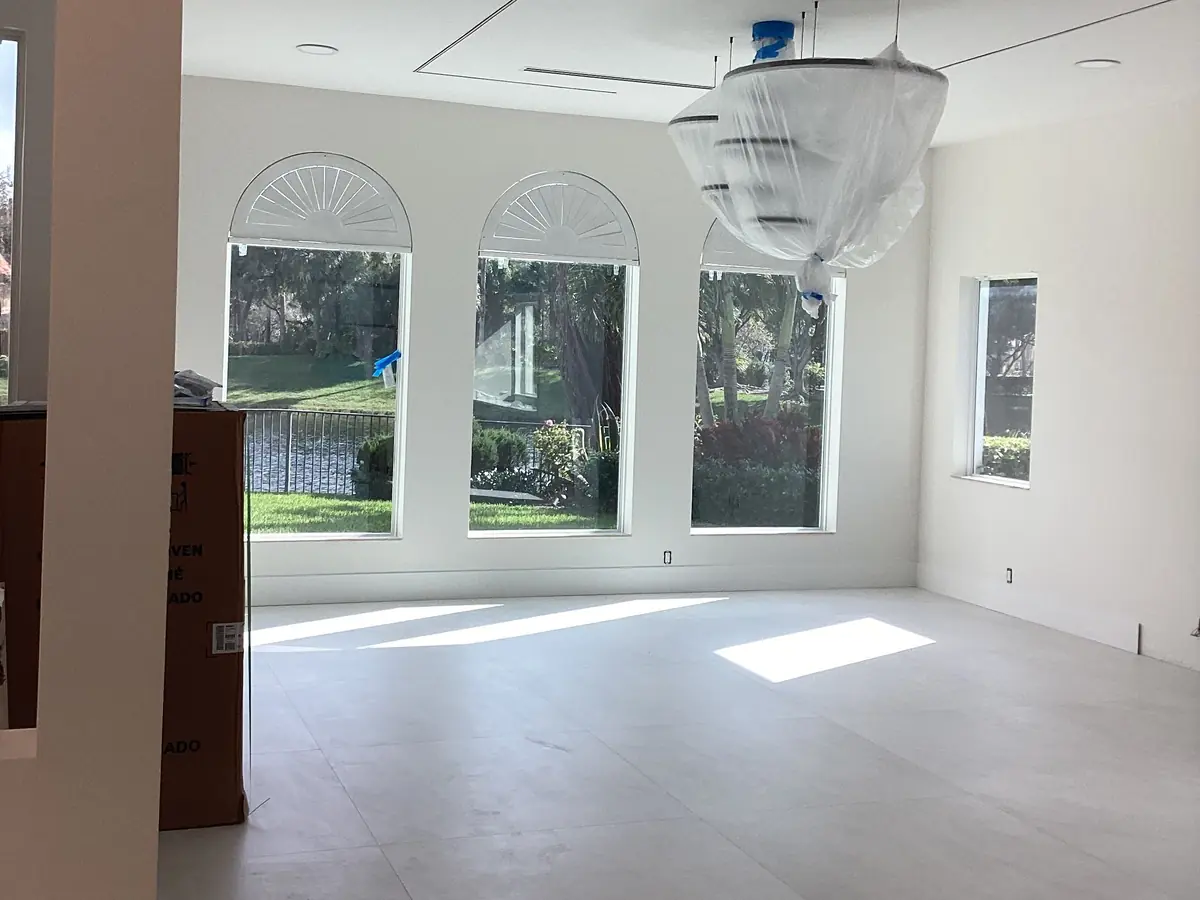
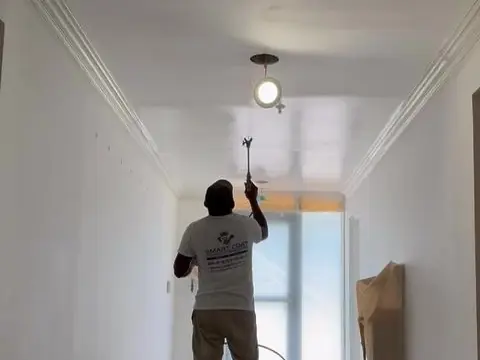
On the job
What affects the price
- Square footage and ceiling height
- How much drywall repair, patching and caulking the walls need
- Number of colors, and whether trim, doors and ceilings are included
- Color changes that need an extra coat (dark over light, or the reverse)
- Occupied home with furniture to move versus an empty property
Questions about this service
How often should I repaint the inside of my house?
Most South Florida interiors start to look tired somewhere between five and ten years, and high-traffic areas sooner. Hallways, kitchens, children's rooms and stairwells usually need attention well before bedrooms and formal rooms do.
Do you paint ceilings as well as walls?
Yes, and we quote them as a separate line so you can decide. Ceilings are worth including when you are changing wall colors substantially, or when there is any water staining, because a freshly painted wall makes an old ceiling look worse.
Can I stay in the house while you paint?
Yes. We work room by room so you always have the rest of the house, and we use low-VOC products so rooms are usable again quickly. We agree working hours and the room order at the walkthrough.
How long does interior paint need to dry before I can use the room?
Modern waterborne wall paints are dry to the touch within a couple of hours and the room is usable the same evening in air conditioning. The film keeps hardening for two to three weeks, so avoid scrubbing walls or pushing furniture hard against them during that period.
What sheen should I use in a Florida home?
Eggshell or satin on walls is the usual answer here, because it cleans easily and tolerates humidity better than flat. Flat still has a place on ceilings and in formal rooms; semi-gloss belongs on trim, doors and bathroom walls.
Do you fix the walls before painting?
Yes — filling, sanding, caulking and spot-priming are part of the standard scope, and larger drywall repairs are quoted as separate line items. Paint does not hide a bad wall; it highlights it.
Will you move my furniture?
We move normal household furniture to the center of the room and cover it. Pianos, large aquariums, wall-mounted televisions and anything fragile or unusually heavy should be dealt with before we start — tell us at the walkthrough and we will plan around it.
Keep looking
Related services
- Exterior PaintingStucco, block, wood and trim, prepped for Florida sun, salt air and rain.Explore
- Specialty FinishesVenetian plaster, faux finishes, wood staining and electrostatic painting for metal.Explore
- Remodeling & AdditionsKitchens, baths, build-outs, additions, tile, counters and built-in millwork.Explore
Where we do interior painting
Guides
Guides on interior painting
Sourced answers to the questions this work raises most often. Every figure carries a citation.
All guidesNo obligation
Get a price for your interior painting job
Send the details and we will walk the property, write a scope you can read, and price it line by line.