Commercial & HOA
Building Waterproofing in South Florida
Water gets into South Florida buildings through joints, cracks and horizontal surfaces long before it gets in through the roof. We find the path it is actually taking, repair it, and apply a system rated for that specific condition.
Who this is for
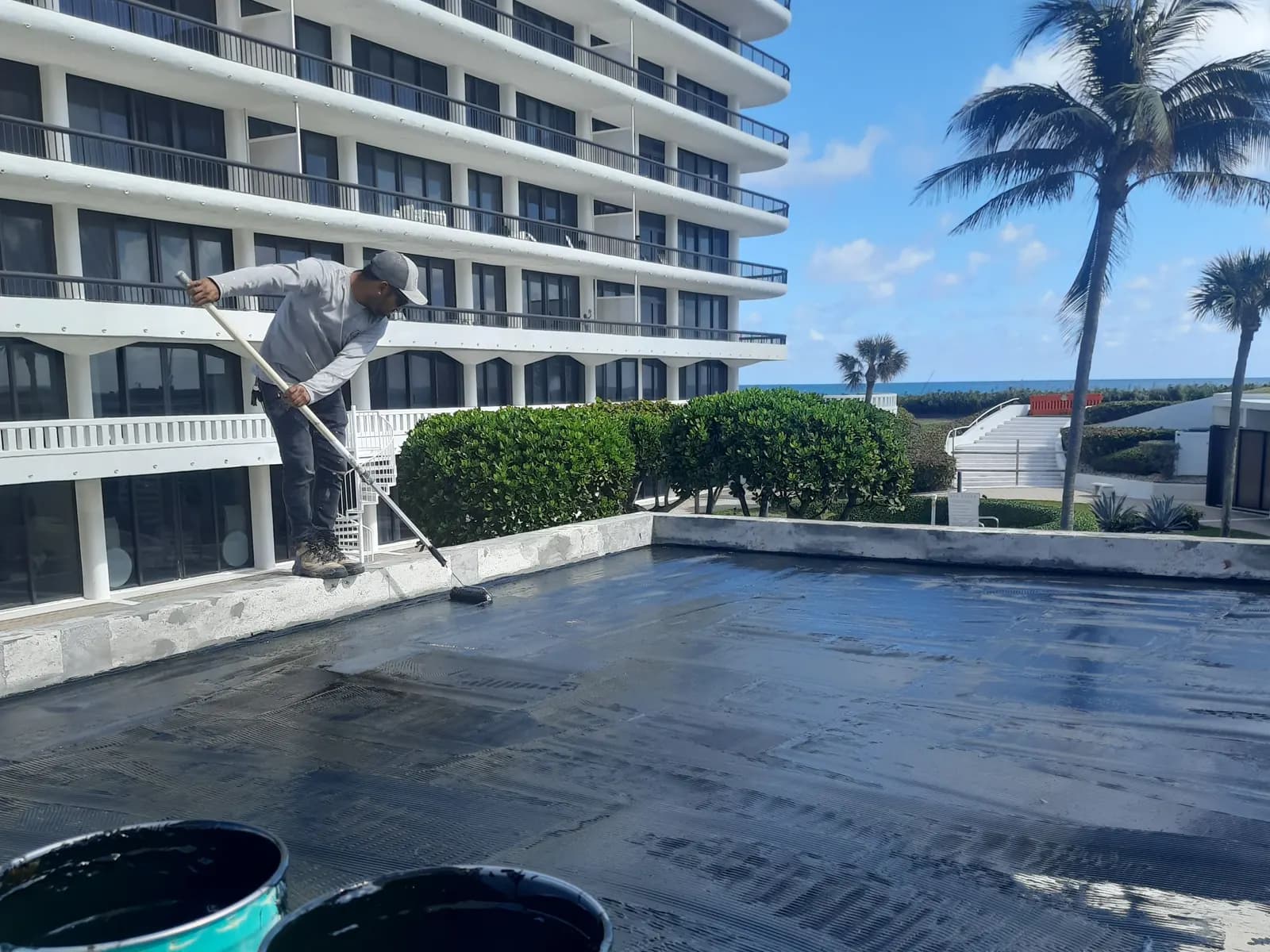
Condo associations, HOAs and commercial property owners dealing with leaks, staining and efflorescence — and anyone repainting a building that has an unresolved water problem, because a coating over a wet wall fails quickly and hides the damage while it gets worse. The South Florida pattern is specific: wind-driven rain during summer storms is pushed horizontally into hairline stucco cracks and failed perimeter sealant, balcony and walkway coatings wear through at the traffic points, and once water is in the slab it starts corroding the reinforcing steel — which is how a waterproofing problem turns into a concrete restoration project.
What's included
- Survey to identify where water is actually entering, not just where it appears inside
- Sealant removal and replacement at windows, doors, control joints and penetrations
- Crack routing, filling and preparation of wall surfaces
- Elastomeric and breathable wall coating systems for above-grade walls
- Balcony, walkway and deck traffic coating systems
- Planter, terrace and podium waterproofing
- Coping, railing base and through-wall penetration detailing
- Water testing where the source of a leak is not obvious
Our process for waterproofing
Investigate
We inspect the affected areas inside and out and, where the path is not obvious, water test to find where it is actually getting in. Guessing at this stage is what makes waterproofing fail twice.
Repair the substrate
Cracks are routed and filled, damaged stucco and concrete are repaired, and any corroded steel exposed during the work is treated before it is covered up.
Replace the sealants
Failed sealant is cut out and replaced at windows, doors, joints and penetrations with the correct backing and joint profile — most wall leaks here start at a joint, not in the field of the wall.
Apply the system
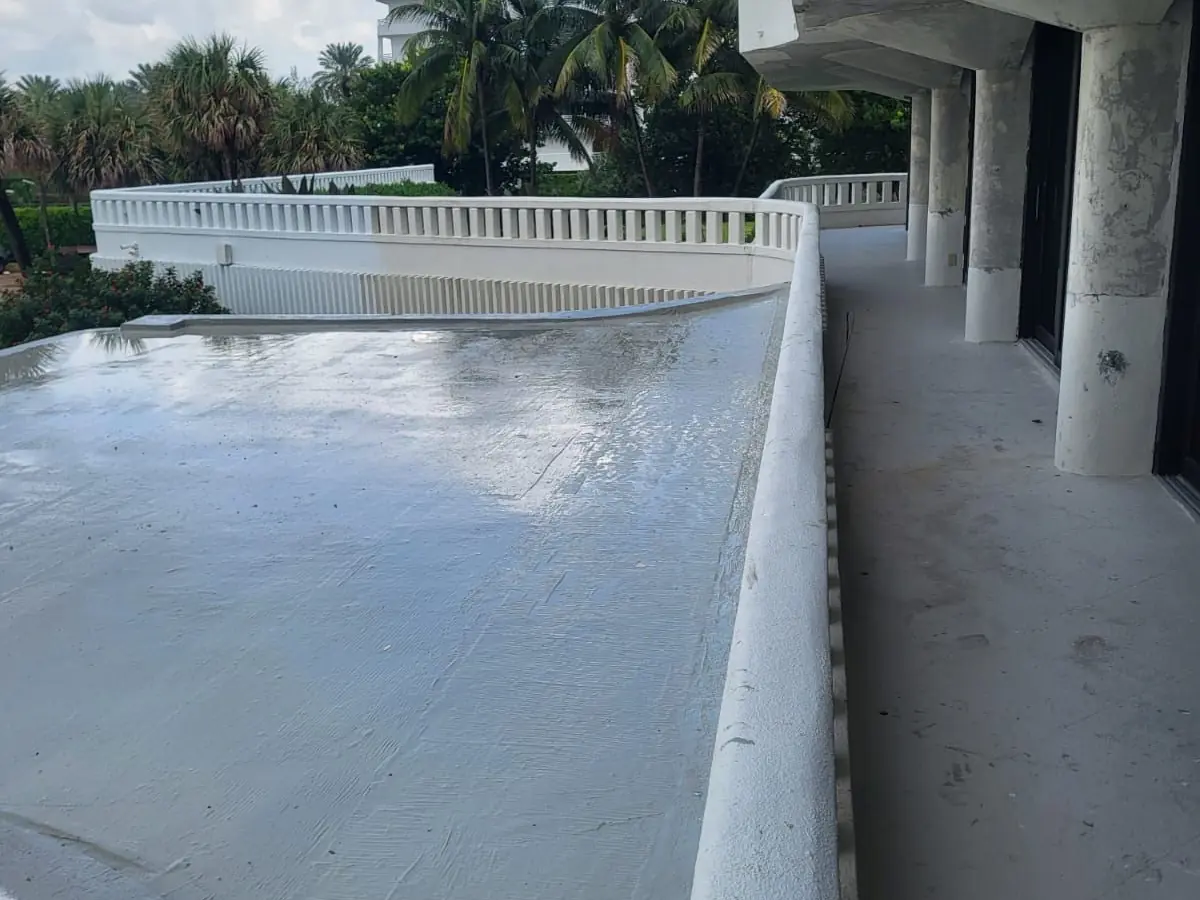
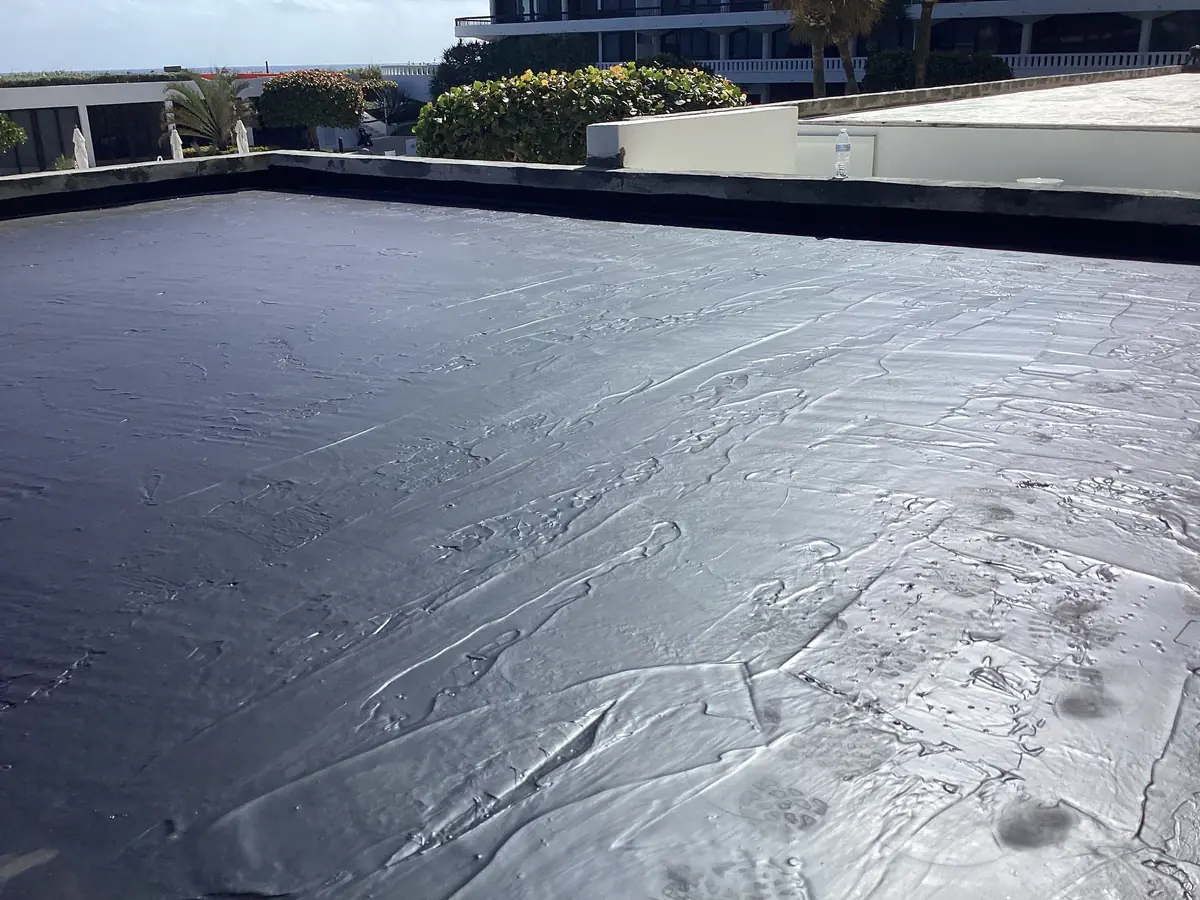
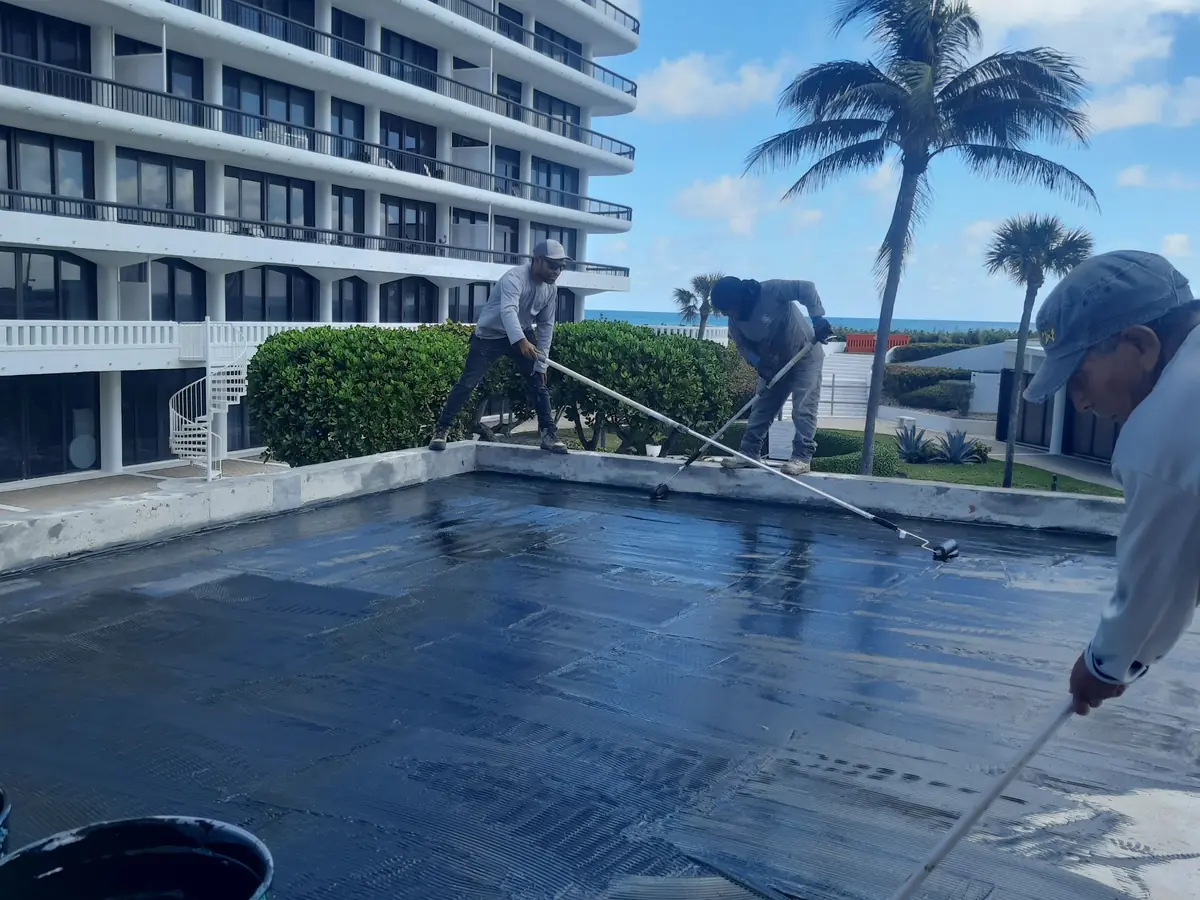
Walls get a breathable elastomeric or waterproof coating; balconies, walkways and decks get a traffic-rated system built up in layers to the specified thickness.
Verify
Coverage and thickness are checked as the work proceeds and, where appropriate, the repaired area is tested again before the job is closed out.
Materials and systems
- Elastomeric and breathable above-grade wall coatings
- Polyurethane, silicone and hybrid joint sealants with correct backer rod
- Urethane and acrylic traffic coating systems for balconies and walkways
- Cementitious and crystalline waterproofing for below-grade and planter areas
- Corrosion-inhibiting primers for exposed reinforcing steel
- Injection materials for active cracks where appropriate
On the job
What affects the price
- Whether the scope is wall coating, joint sealant, traffic coating or all three
- How much substrate repair is needed before waterproofing can be applied
- Building height and access — lifts, swing stages or scaffolding
- Whether water testing or investigative work is required first
- Occupied balconies and walkways that need phasing around residents
Questions about this service
How do I know if my building needs waterproofing?
The usual signs are water stains on interior walls or ceilings after heavy rain, bubbling or peeling paint, efflorescence — the white powdery deposit — on masonry, musty smells, and cracks that reappear after being patched. Rust staining or flaking concrete at balcony edges means water has already reached the reinforcing steel.
Which parts of a building do you waterproof?
Above-grade walls, balconies, walkways and terraces, planters and podium decks, parapets and copings, and all the joints and penetrations between them. Roofs are covered separately by our roof restoration systems.
How long does waterproofing last?
Service life depends on the system and the exposure. Joint sealants and traffic coatings on balconies and walkways wear faster than wall coatings because they take foot traffic and standing water, so they are normally inspected and refreshed on a shorter cycle than the wall system.
Can you waterproof and paint at the same time?
Yes, and on most association projects that is exactly the right sequence: repair, waterproof, then coat. What you cannot do is paint over an active leak — the new coating traps the moisture and fails, and the underlying damage keeps progressing out of sight.
Do balconies and walkways need a different system?
Yes. Horizontal surfaces that take foot traffic need a traffic-rated coating system with a wear layer, not a wall coating. Using a wall product on a balcony deck is a common shortcut and it fails quickly at the traffic paths.
Do you find the leak, or do we need an engineer first?
For most straightforward leaks we can locate the entry point ourselves, including with water testing. Where a building has structural concerns or an insurance or litigation angle, an engineer's report is the right starting point and we will bid to it.
Keep looking
Related services
- Concrete RestorationSpalling repair, crack repair and structural concrete restoration on balconies, decks and structures.Explore
- Stucco RepairCracked, flaking and delaminated stucco cut out, rebuilt and textured to match.Explore
- HOA & Community PaintingWhole-community and condo building repaints, phased around residents.Explore
Where we do waterproofing
Guides
Guides on waterproofing
Sourced answers to the questions this work raises most often. Every figure carries a citation.
All guides9-minute read
Milestone inspections and SIRS: what Florida condo boards should know before repaintingThe statutory deadlines, the 25-or-30-year question in Broward and Palm Beach, and why waterproofing and exterior painting are a named SIRS line.6-minute read
The best time of year to paint in South Florida (with the weather data)November to April is the dry season, and the rainfall normals show why. What temperature, humidity and dew point rule out here — and what they do not.6-minute read
Why exterior paint peels, blisters and chalks in Florida — and how to fix it properlyBlistering, peeling, chalking, efflorescence and surfactant leaching — each with the manufacturer's stated cause and repair, plus the cure and pH limits.
No obligation
Get a price for your waterproofing job
Send the details and we will walk the property, write a scope you can read, and price it line by line.