Commercial & HOA
Stucco Repair and Restoration
Cracked and flaking stucco is how water gets into a South Florida wall. We cut out what has failed, rebuild it in the correct layers, match the existing texture, and seal the wall so the repair does not reappear next rainy season.
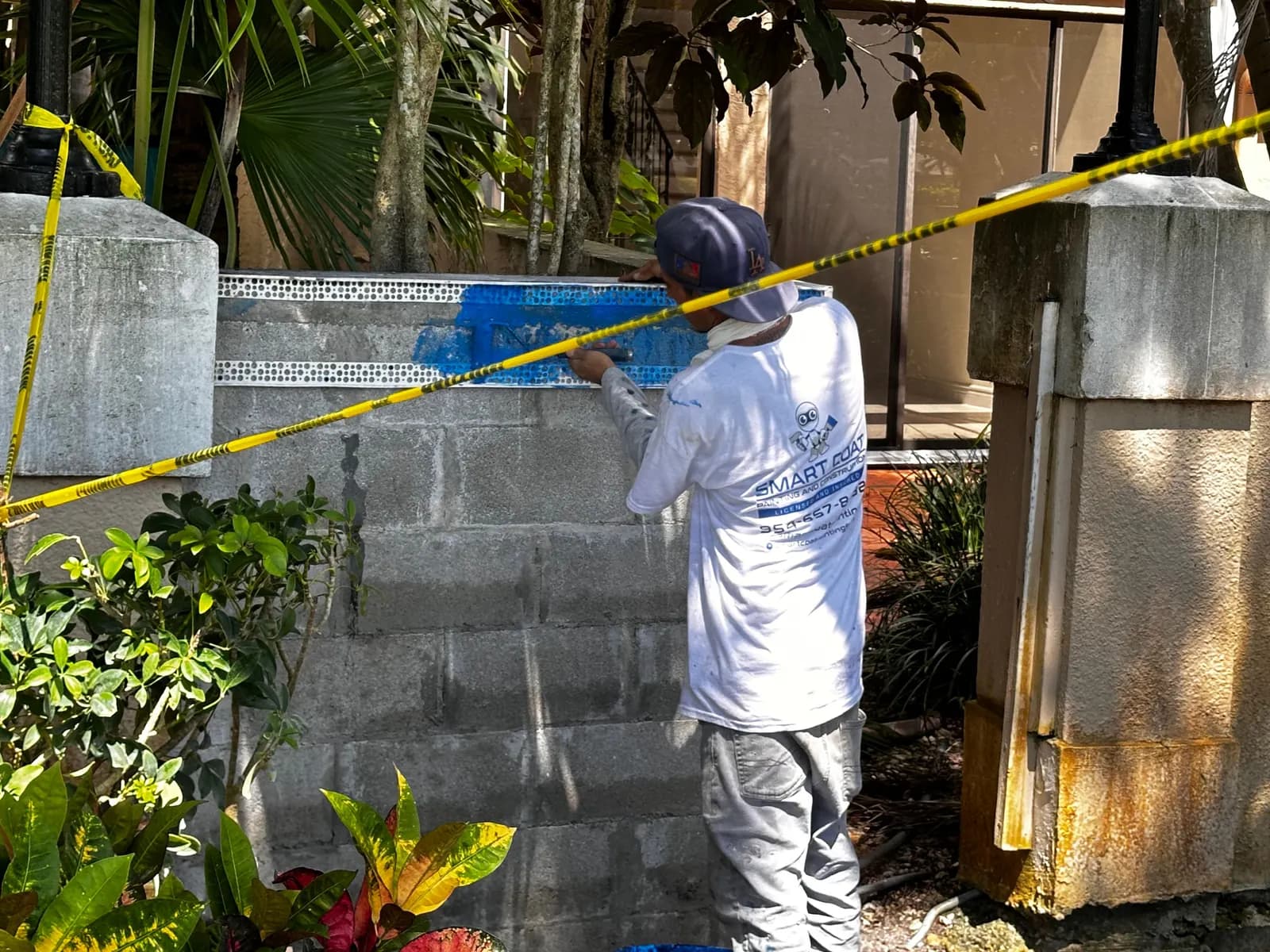
Who this is for
Homeowners, associations and commercial owners with cracking, hollow-sounding or flaking stucco — the standard South Florida wall problem. Stucco here is under constant thermal movement and takes wind-driven rain from summer storms; hairline cracks open up at corners and around openings, water gets behind the stucco, and the stucco loses its bond to the substrate and starts to come away in sheets. Painting over it does nothing: the crack telegraphs straight back through the new coating, usually within the first year.
What's included
- Survey and sounding of walls to find delaminated areas behind sound-looking stucco
- Hairline and structural cracks routed out, filled and finished
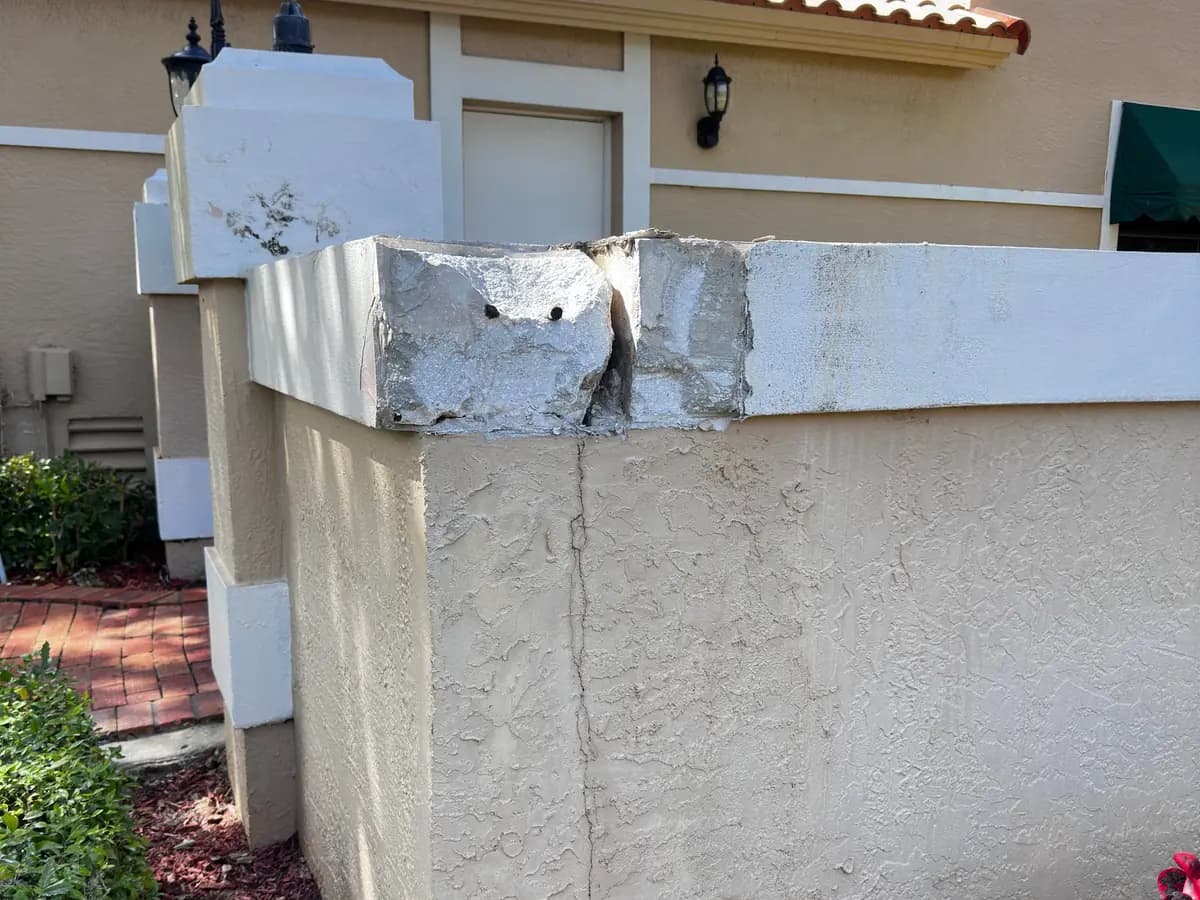
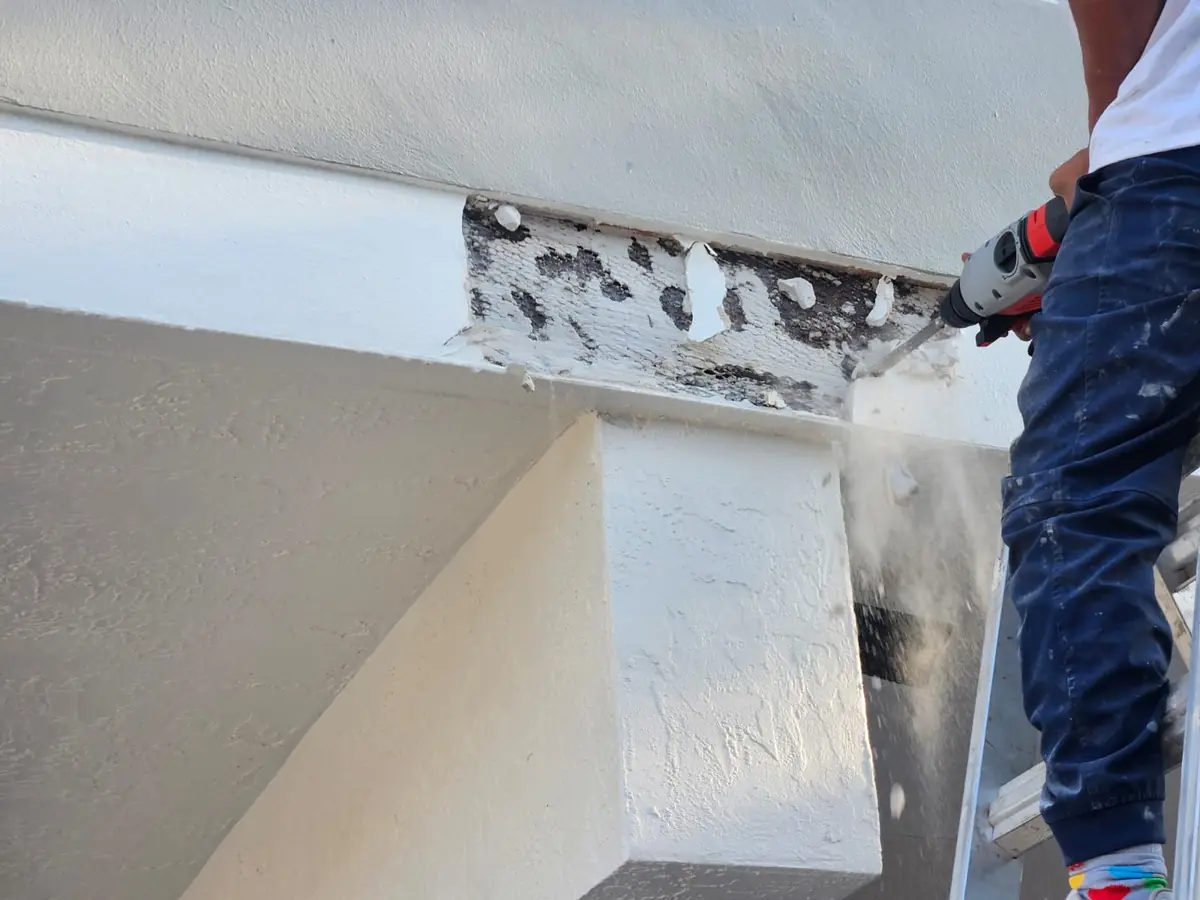
- Failed and hollow stucco removed back to sound material
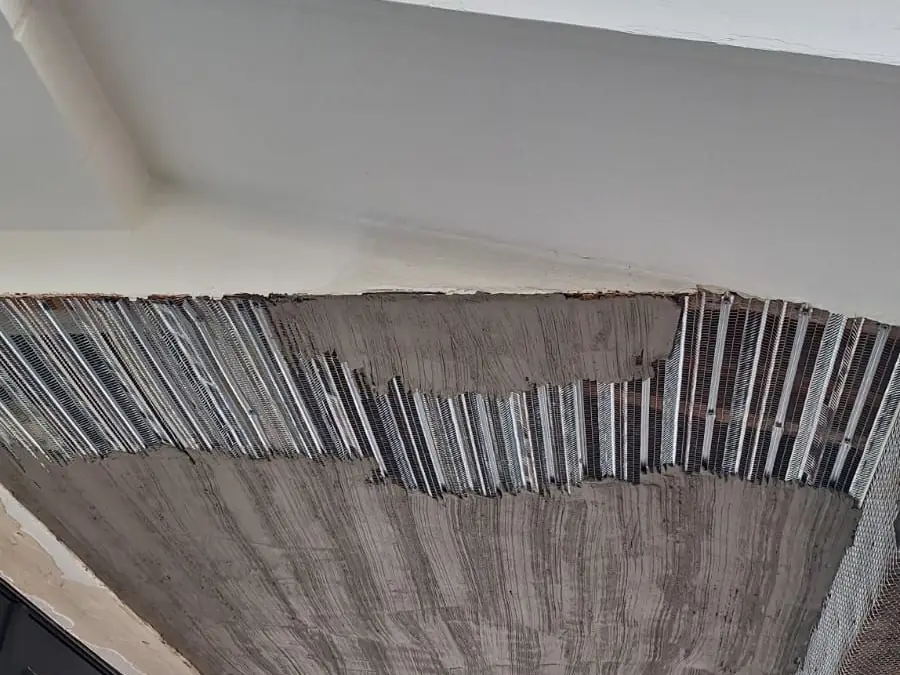
- Lath repaired or replaced where the substrate requires it
- Scratch, brown and finish coats rebuilt in the correct sequence and cure time
- Texture matched to the existing wall — knockdown, sand, dash, smooth and Spanish lace
- Bands, sills, columns, quoins and decorative moldings restored or recast
- Repaired areas primed and sealed before the finish coating
Our process for stucco repair
Survey the walls
We sound the stucco to map the areas that have lost their bond, not just the ones that have visibly failed, and identify whether the cracking is movement, settlement or water damage.
Cut out the failed areas
Hollow and damaged stucco is removed back to sound material, and cracks are routed out to give the repair material a proper key rather than a feather edge.
Repair the substrate
Lath, sheathing and any corroded fasteners behind the stucco are repaired or replaced. Rebuilding over a bad substrate simply relocates the problem.
Rebuild in coats
Stucco is rebuilt in its proper layers with cure time between them. Rushing the coats is why some repairs crack again within a season.
Match the texture
The finish coat is worked to match the surrounding wall texture. Getting this right is what makes a repair invisible once the wall is coated.
Prime and coat
Repairs are primed and the wall is coated — usually elastomeric where cracking has been the ongoing problem — so the repaired area is sealed against water.
Materials and systems
- Portland-cement stucco mixes for scratch, brown and finish coats
- Polymer-modified patching materials for smaller repairs and crack filling
- Galvanized and stainless lath, corner bead and accessories
- Bonding agents for repairs to existing stucco and masonry
- Elastomeric coatings to bridge hairline cracking after repair
On the job
What affects the price
- Area of failed stucco found during sounding, versus what is visible from the ground
- Whether lath and substrate repair is needed behind the stucco
- Difficulty of the texture match — heavy or unusual textures take longer
- Decorative elements such as bands, sills, columns and moldings
- Access and height, and whether the wall is coated as part of the same contract
Questions about this service
Why does stucco crack in South Florida?
Mostly thermal movement, building settlement and water. Walls expand and contract daily in the heat, hairline cracks open at corners and around window and door openings, and wind-driven rain during summer storms pushes water into them, which widens the crack and undermines the bond.
Can I just paint over cracked stucco?
No. Paint bridges a hairline crack for a season at most, and the crack telegraphs back through the coating — meanwhile water keeps getting into the wall. Cracks need routing and filling first; elastomeric coating then helps keep them closed.
How do I know if my stucco has failed behind the surface?
Tap it. Stucco that has lost its bond sounds hollow compared with sound wall, and that hollow area is usually much larger than the visible flaking. We sound the walls as part of the survey so the quoted quantity reflects the real damage.
Can you match my existing texture?
Yes — knockdown, sand, dash, smooth and Spanish lace textures are all matched by hand on site. On a wall that is going to be coated afterwards, a good texture match makes the repair effectively invisible.
Is it cheaper to repair stucco or replace the whole wall?
Repair, in almost every case where the damage is localized. Full removal and replacement is warranted when a large proportion of the wall has lost its bond or the lath and substrate behind it have failed, and the sounding survey tells us which situation you have.
How long before the repair can be painted?
New stucco needs cure time before it is coated, and coating too early causes discoloration and adhesion problems. The exact wait depends on the material and the weather, and we build it into the schedule rather than rushing the finish.
Keep looking
Related services
- Concrete RestorationSpalling repair, crack repair and structural concrete restoration on balconies, decks and structures.Explore
- WaterproofingWalls, balconies, decks and joints sealed against wind-driven rain and standing water.Explore
- Exterior PaintingStucco, block, wood and trim, prepped for Florida sun, salt air and rain.Explore
Where we do stucco repair
Guides
Guides on stucco repair
Sourced answers to the questions this work raises most often. Every figure carries a citation.
All guides6-minute read
How long does exterior painting take in South Florida?What decides the calendar on an exterior repaint here: crew size, the coating's recoat window, stucco cure times, rain and dew — with the figures.6-minute read
How much does exterior house painting cost in South Florida? (2026)National and Florida-specific 2026 cost data for an exterior repaint, what stucco changes, and the five things that move a quote up or down.6-minute read
Why exterior paint peels, blisters and chalks in Florida — and how to fix it properlyBlistering, peeling, chalking, efflorescence and surfactant leaching — each with the manufacturer's stated cause and repair, plus the cure and pH limits.
No obligation
Get a price for your stucco repair job
Send the details and we will walk the property, write a scope you can read, and price it line by line.